APK is an Android application package format. The extension alone does not tell you whether a particular copy may be downloaded, modified or distributed. Check who owns the app, how the copy was obtained, what its licence permits and which rules apply to the intended use.
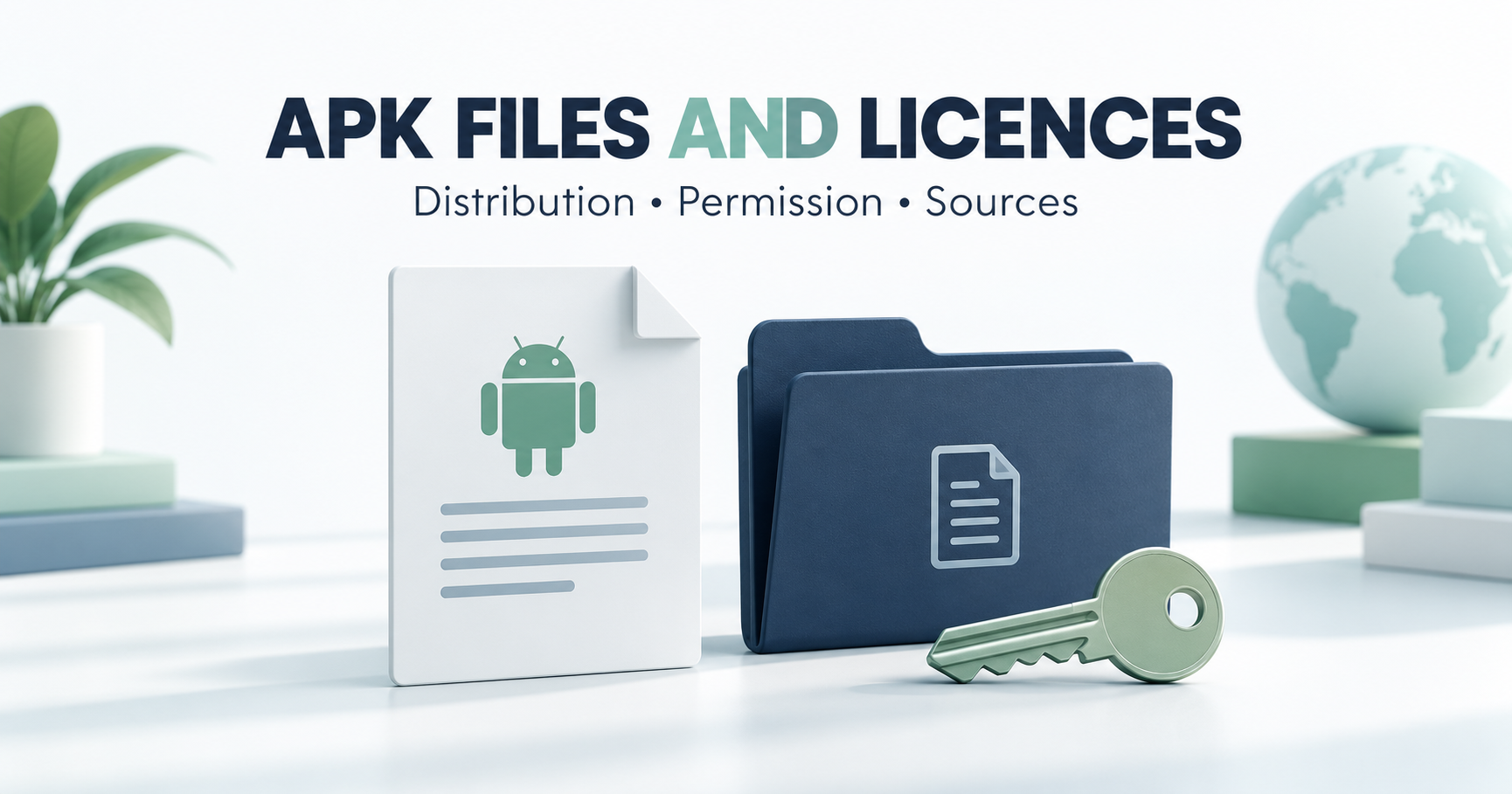
The file format and the rights are separate
A developer can distribute its own Android app as an APK. Other publishers may grant copying or modification rights under an open-source or other licence. These permissions have conditions; “free to download” does not necessarily mean permission to redistribute, remove restrictions or sell a modified version. WIPO’s copyright overview explains that computer programs can be protected by copyright.
Check the specific licence and source
Start with the developer’s official website, store listing or project repository. Look for the licence covering that release and any conditions attached to modification and redistribution. A third-party download page saying “legal” is not a substitute for the rights holder’s permission. If the source cannot identify the developer or licence, avoid making a legal conclusion from its marketing text.
Paid apps and modified packages
Having an APK file does not establish that you bought an app, subscribed to a service or hold redistribution rights. Likewise, a “premium unlocked” label does not prove that the rights holder permits the changes. For modified packages, assess the original app’s licence and the modification’s distribution terms. Our mod APK guide explains source, signing and feature claims.
Do the same rules apply in Germany?
Local law matters. Germany’s Copyright Act section 69a addresses protection of computer programs. That provision is context for software rights, not approval of every APK website or permission for a particular copy. A country name in a search query does not resolve the app’s licence, the act being performed or relevant exceptions. For a specific dispute or planned distribution, obtain advice about the actual facts and applicable jurisdiction.
Downloading, installing and sharing are different actions
Permission to install a legitimately obtained app does not automatically authorise uploading that file publicly. Permissions can differ for personal use, redistribution, commercial use and derivative works. Account-based services may also have their own rules. Keep a record of the licence and the publisher’s source when deciding what you are allowed to do.
Legal permission does not prove file safety
An authorised package can still be incompatible with your device, and a file’s technical properties do not settle its licence. Assess security separately: identify the exact build, signing identity, requested permissions and supported update path. Read our APK safety checks and download-source guide for that separate assessment.
What this guide can establish
This is general information about format, source and permission checks. It does not determine whether an unidentified APK is lawful in your circumstances. We have not reviewed a private licence agreement or approved a particular redistribution. Prefer a publisher-authorised source and seek clarification from the rights holder when its terms do not cover your intended use.